Cuco and Yeya’s Clutter

This is a mini-tres bien ensemble/inventory revolving on Mamita and Papito.

Cuco and Yeya's clutter

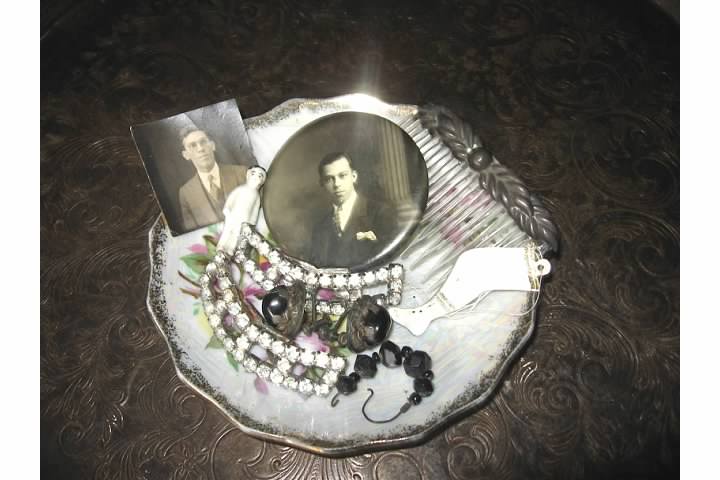
Starting at upper left is a photo of Papito’s father, Louis Robaina, Sr. The little porcelain baby good luck charm was popular during the celebration of the Feast of the Epiphany (January 6th) also known as “El Dia de los Reyes” and belonged to Inez (Papito’s mother). The round photo is of a very young and dapper Papito. The silver hair comb was Mamita’s and purchased in Mexico. The silver “milagro” of a leg was used in some sort of a supplication to God or one of his saints to heal that particular body part. The silver and black stone (obsidian?) earrings were Mamita’s and may have originally been her mother’s. The two rhinestone shoe buckle clips are I don’t know whose. They must have belonged to Grandma because I can’t imagine Mamita donning a pair of evening slippers with anything sparkly like that.

Birds of a feather

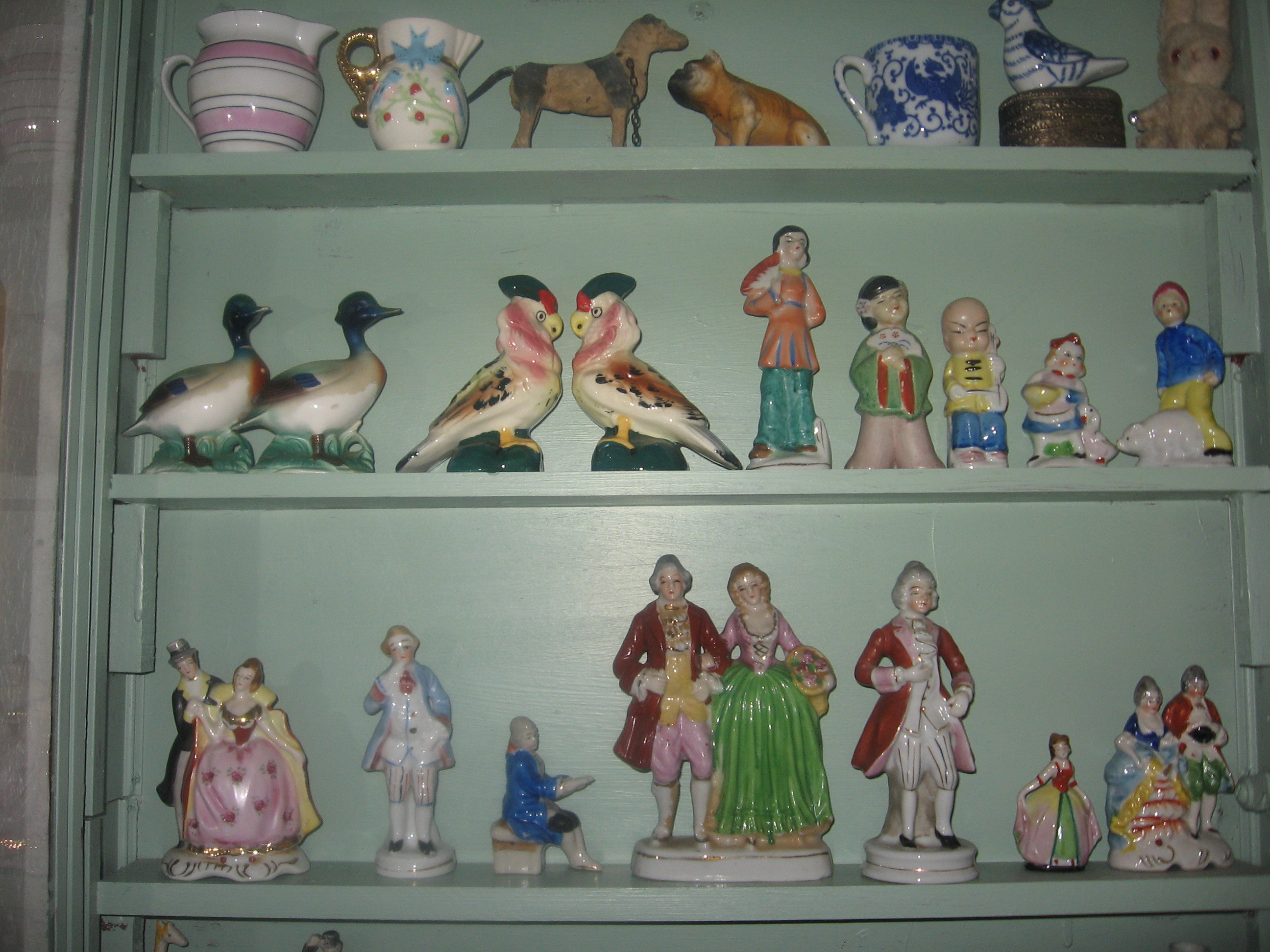
This is the first in a series of inventories called “Tres bien ensembles” featuring items that, well, “go together well,” in this case ceramic birds. Most of these are mid-century Japan, including one marked “Made in Occupied Japan” (see earlier post) and one unmarked vase that is probably Japanese and looks Deco.

When gaming was unplugged…Or the ageless appeal of Chinese Checkers

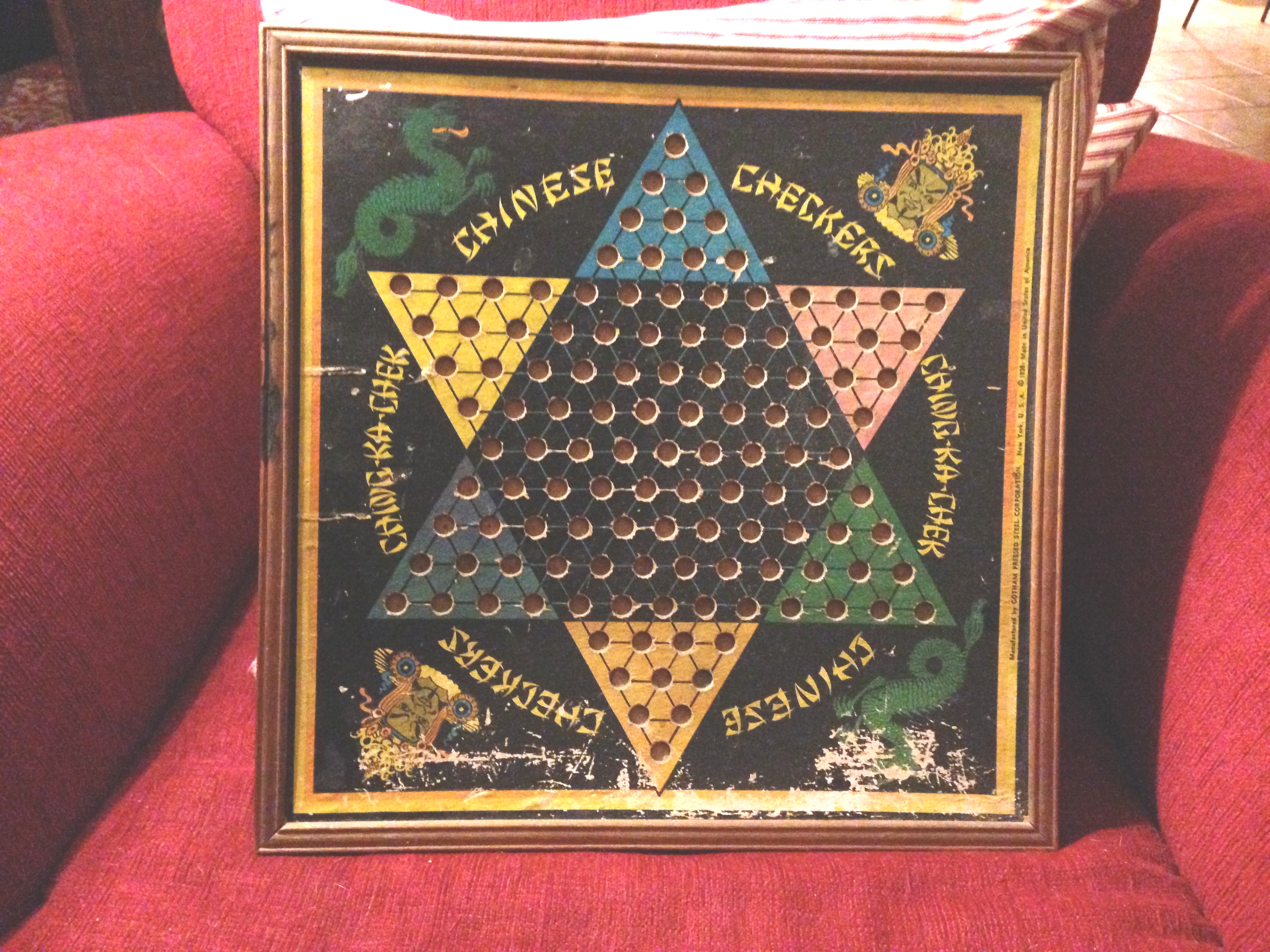
You may find this hard to believe, but once upon a time you didn’t need a computer or smart phone to have fun. Humans are social creatures, and we’ve always come up with amusing ways to spend time in one another’s company—and no, this doesn’t include sex. Parlor games like checkers, dominoes, and card playing (except Solitaire for obvious reasons), brings friends and families closer together. There’s nothing to plug in, no bells or whistles to break, and rules are mostly simple and straightforward. Enter the Chinese Checkers Dragon!

Chinese checkers delight

According to the fine print along one edge, this cutie pie was manufactured by Gotham Pressed Steel Corporation in 1938 and was “Made in the United States of America” (The Bronx to be exact). The other side of the board is for checkers so you can have double the fun. I learned how to play Chinese Checkers on this board, as did Grandma and Tia Adele. Mamita taught me the best way to start the game and how to avoid the pitfalls of leaving your marbles stranded. Two people can have a good time, but the more the merrier. I especially loved when enough of us played that we’d form a tremendous arroz con mango with everyone’s marbles jammed in the middle.

I’ll be honest—every time I’m in a social setting and everyone is looking down and futzing with their smart phones instead engaging one another, I feel sad and more than a little sorry for the future of our species. These digital forms of entertainment lack the personal connection that makes us human. Just remember that when the last Play Station and iPhone lie moldering in some post-apocalyptic junkyard, Chinese Checkers will still rock.

Cuco’s Fine Cigar Box

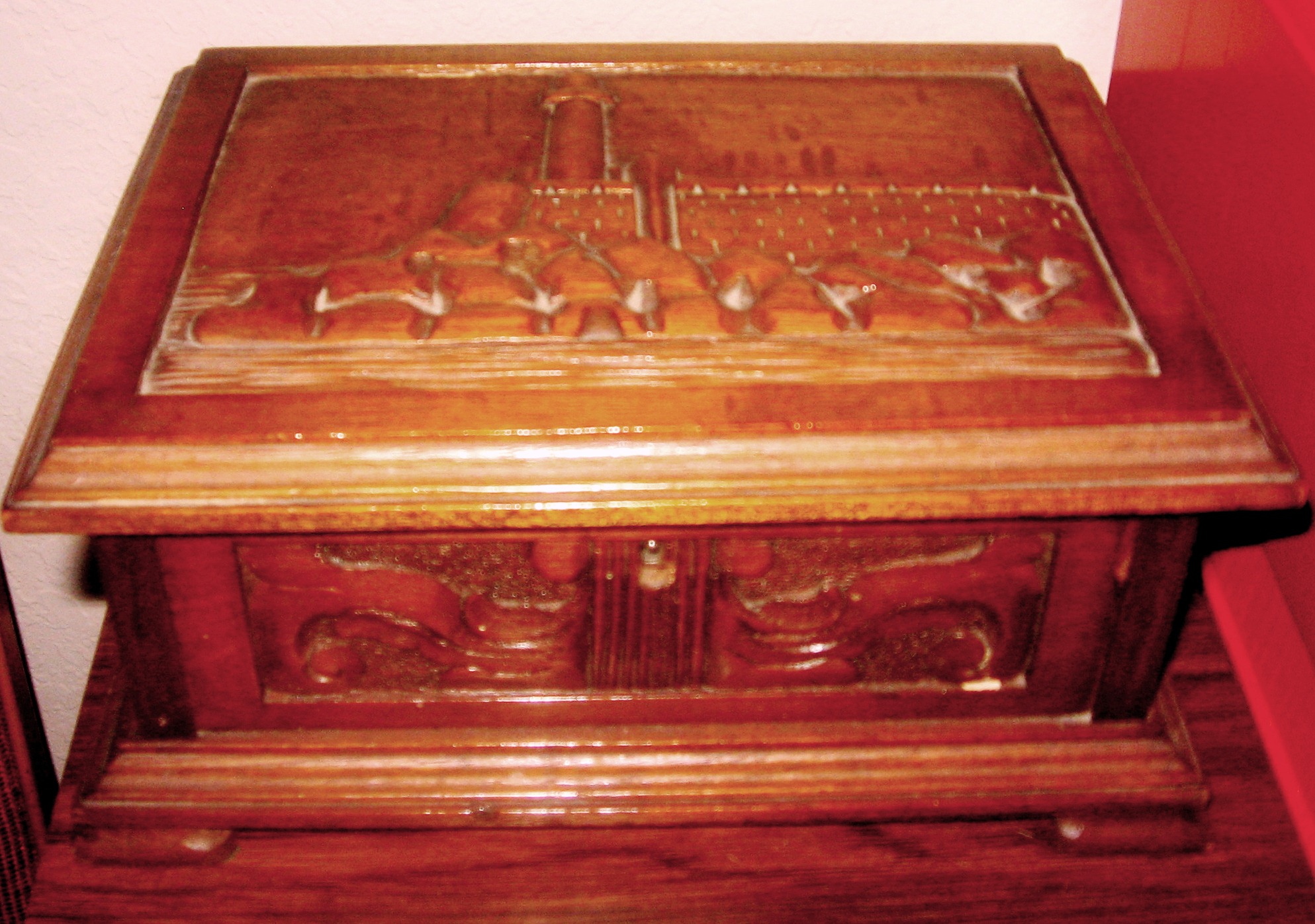
ImageThis carved wood humidor belonged to Papito (AKA Papo, Cuco, Louis Robaina) and once held finely made Cuban leaf cigars. The carving on the lid is of El Morro Castle, a beloved iconic symbol of Cuba. (Just ask any of your grandparents.) Papito worked in cigar factories in Tampa/Ybor City for a good portion of his life and achieved the distinguished rank of escogedor or color grader. According to Tobacco: Its History, Varieties, Culture, Manufacture and Commercewith an account of its various modes of use, from its first discovery until now (that being 1875 when the book was published): “the general sorting of the tobacco is done by hands of great experience and judgment, who are in the highest consideration in the factories.” Pretty fancy. However this description kind of runs counter to his later reputation for doing “Cuco Robainas,” those blood chilling acts of expedience and innovation by which he sometimes “fixed” things.

You’ve all heard the stories—the clamping of a cigarette-lighter-powered fan onto the dashboard of my Mustang after the air conditioner broke…the staple-gunning of said Mustang’s interior roof lining when it started to sag…the mauve picnic table…the application of cement to a neighbor’s sore tooth…the list goes on and on. There’s no doubt that Papito was a fine craftsman who loved to keep his hands busy, thus the almost complete cementing of Grandma’s and Grandpa’s backyard—believe me when I tell you that this was achieved bit by bit, as if he’d stretched out his ultimate goal so he could enjoy the cement-laden wheelbarrow’s meandering journey across the backyard. That, or he was hoping Grandma wouldn’t notice. He was such a wonderful man and all is forgiven, but not forgotten, now. Thank you, Papito.

Inez’s Gaslight

“Inez era del carajo.” Thus Mamita summarized her mother-in-law in one succinct sentence.

Inez Chavez, Papito’s mother and your great-great-grandmother, was one tough lady. Born in Key West, moved to Tampa, worked in a cigar factory, married, had two children and buried them, became a widow, remarried, had a son, widowed anew, tormented Mamita, doted on  your Grandma, died of a bad blood transfusion.

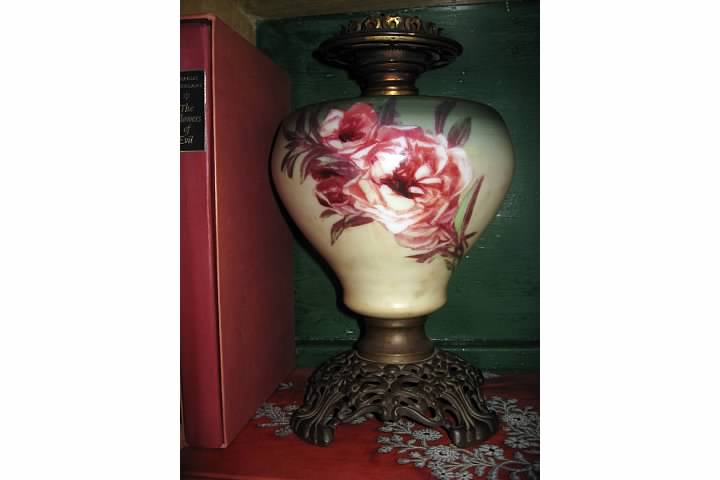
Inez gas lampAnd then we have this pretty polly of a piece to remember Inez by. The top bowl broke long before I set my eyes on it, but it can still come in handy filled with kerosene if a hurricane blows through town.

Speaking of hot air, Inez was also a devout Catholic—which only confirmed Mamita’s complete disdain for any affectations of piety by people who weren’t very, well, Christian. Inez believed in a panoply of saints and bought orations that could pretty much cover any and all ailments or misfortune in a brimming catalogue of potential human calamity. And, indeed, when you think of the hardships Inez endured, one can hardly begrudge her a belief in something finer, full of mercy, a heaven beyond this world.

But if you asked Mamita, Inez came from the other place.

A Rocking Time Machine

Angel Maria's rockerThis Cuban mahogany rocker is one of a pair that belonged to your great-great-grandfather Angel Maria Cremata. He had them in the front parlor of his colonial-style home in Santiago de las Vegas, Cuba. This chair has witnessed a great deal of paternal decrees, fraternal kerfuffles, political intrigue, and even survived a bombing by the minion of a partisan rival. (Fortunately Papa, as Mamita would call him, was not in the room at the time.) There is speculation as to who “done it,” but I will refrain from including the likely culprit here as there is the delicate situation of the rascal’s descendants getting upset. Mother (Belica) had the rockers in her house in Tampa and then in Miami. She sat in these until she got too sick to get out of bed at the very, very, very end. She knew I loved them and bequeathed them to me. In a burst of filial amity I gave one to Tia Adele, and thus one of Angel Maria’s rockers now resides in Chicago.

It’s said that a person is not truly dead until the last person who knows his name is also dead. In that case, Angel Maria is still very much alive (as are Mamita, Papito, and Mother). When you see this rocker, think of Angel Maria, his handsome face, the white suit, his stentorian tones and official proclamations and know that he lives still in my memories of someone else’s memories and now yours.

The formerly unwanted “Miller’s Chair”

When Dad and I got engaged back in 1981, he was attending the University of Miami, which had married housing on the Coral Gables campus. A semester before our wedding, we put our names on the waiting list (required a $5 deposit), and one month after we were married in July 1982, we moved into our one-bedroom, one-bath post-War, modernist beauty (designed by renowned Florida architect Marion Manley) —our rent was $285 a month including utilities. Sweet.

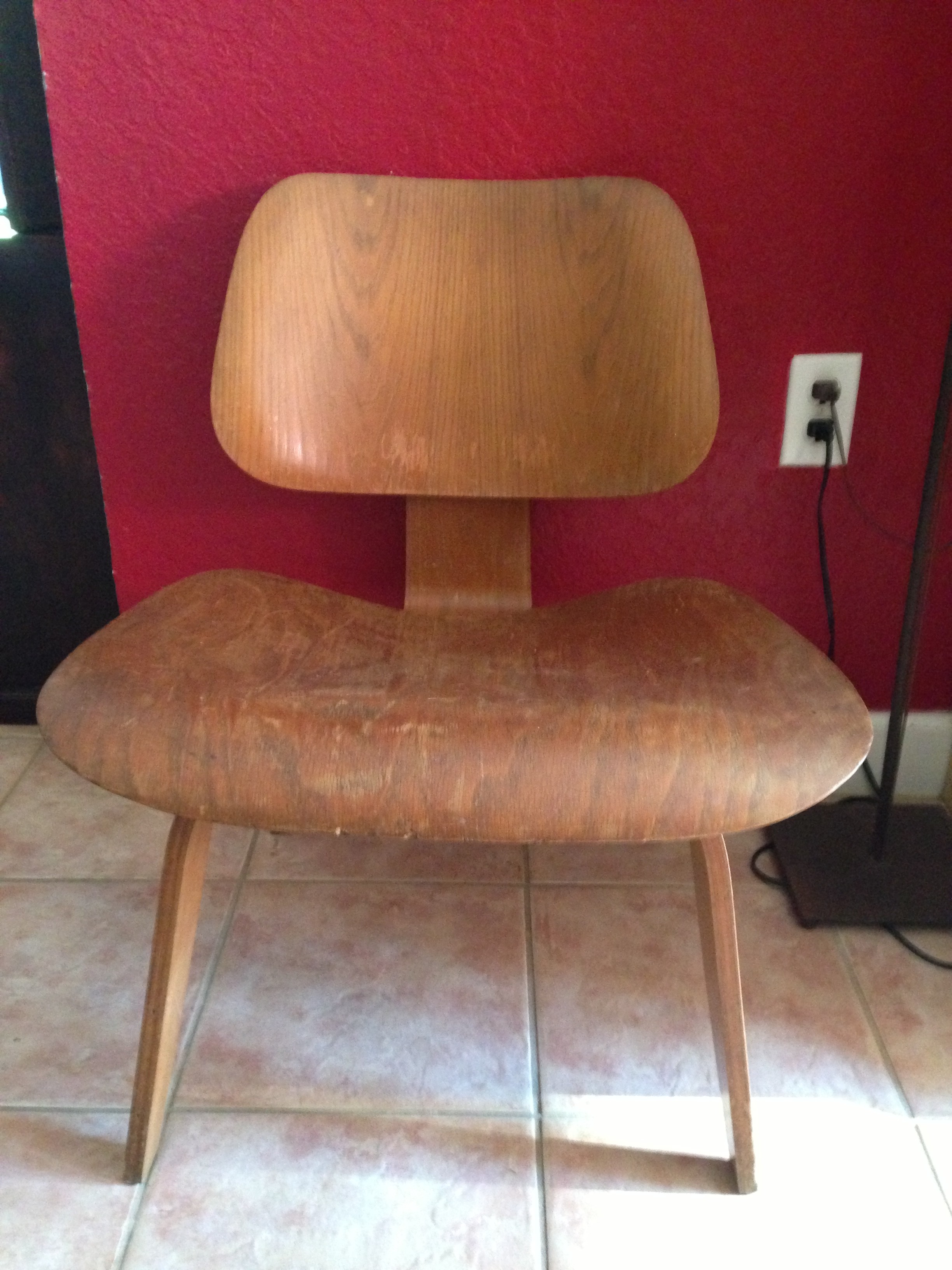
The apartment came furnished, and you could just pick out the pieces you wanted to use. The selection was a fairly motley collection of midcentury pieces that had suffered many college life indignities since they were originally purchased circa 1949. We already owned a lot of stuff thanks to our fabulous gift registry (and my pack rat-ness) so we only kept the vinyl covered armless sofa and what was labeled on the inventory as a “Miller’s Chair” (pictured below). These cute little chairs of bent plywood were scattered all around the housing quad—people left them by their front doors and put plants on them. They were clearly regarded as shabby “throwaways” by the University and its tenants.

When we moved out of the apartment the following year (alas Dad graduated and we were kicked out–Dad claims we’d still be living there if it were up to him*), we left behind the sofa but took the little chair with us. Nobody noticed.

Turns out the chair is an original Herman Miller Eames Plywood Lounge Chair—a midcentury and highly collectable design icon. We’ve joked that if we ever needed help paying the mortgage, we could always sell the chair on eBay. (Not a chance.) What I do know is that you both will fight over who gets to keep it. May I suggest you use a coin toss over verbal or physical combat? It will definitely come in handy if you’re ever short on your rent.

*By the way, the married dorms were torn down some time ago to make the Wellness Center. Our honeymoon cottage is now a parking lot-c’est la vie.

The unwanted "Miller's Chair"

The unwanted “Miller’s Chair”

It’s complicated

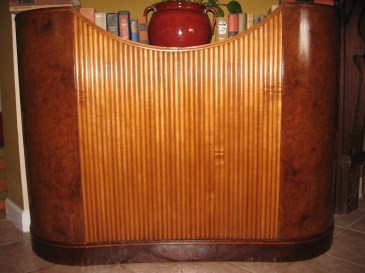
ImageI’m not exactly sure the function of this piece – I suspect it is a sort of room divider or jardiniere made out of wood with burled wood finishes in an Art Deco style, probably from the late 30s to early 40s.

How this gorgeous piece got to me is a complicated tale of Dominicans, dictators, and me.

The Reader’s Digest version follows.

The piece originally belonged to the beauty queen mistress of a Dominican dictator (let’s call him RT), who was in power from 1930 until his assassination (allegedly by the CIA ) in 1961 (the year I was born…coincidence?) Being already married and like all good Latin machistas not inclined to divorce, RT did the next best thing by providing financial support and publicly recognizing their out-of-wedlock children – one boy and one girl.

The unofficial household were comfortably and conveniently established in a Miami Beach estate located on Collins Avenue and later sold and torn down to make way for a major resort hotel (the Conover?)

Moving right along, the daughter married Tio Joe circa 1960, and the whatever-it-is passed on to Mother (AKA Belica, Isabel Suarez nee Cremata) – an inveterate keeper of, well, everything. It was in her home, next door to mine, that I fell in love with “it”. Exiled in a storage room adjacent to the carport of Mother’s house, the two tops on either end became water damaged and the veneer warped.  Nonetheless, it was still a score when Mother passed it on to me.

Your father hated it from the beginning. Besotted and bewitched by its beauty and whiff of notoriety, I ignored his threats to throw it out of the moving van or into the backyard lake. Lucky for all of us, he decided to try his hand at restoring it a few years ago, using the greatest of care I might add.

Today, it is a singularly stunning and celebrated piece admired by all who see it…and its piquant provenance ain’t too shabby either!

When Japan was Occupied

Mother (Belica) had a small ceramic figurine of a gentleman and a lady with “Made in Occupied Japan” stamped on the bottom. This sinister sounding provenance fascinated me, and I always kept track of the figurine’s whereabouts in Mother’s overwhelmingly cluttered home, crammed with objects collected and “rescued” over a lifetime (and according to Mamita “Mucha mierda.”)

After Mother passed away I became the proud owner of this charming pair, and over the years I have collected many pieces bearing the “Occupied Japan” pedigree—paying $2 to $8 or so for each—never more than that. They’re tacky but also quite lovely with a whiff of tragedy in the aftermath of a defeated nation.

“Occupied Japan” figures are a lingering memento to World War II and the period immediately following Japan’s unconditional surrender between August 15 1945 and April 28 1952. Here’s a little background from a website dedicated to the history of “OJ” collectables.

That millions should have paid with their lives in the war against Japan—soldiers in battle, innocent victims of atrocities, and the annihilation of split atoms falling from the sky—only to end up producing cheap souvenirs that would later be collected by people like me.

What’s the value of a ceramic dandy and his gal? Five bucks, ten? But as an artifact that bears the indelible stamp of a holocaust now fading from living memory? Priceless.

Cheers and Cha Cha Cha

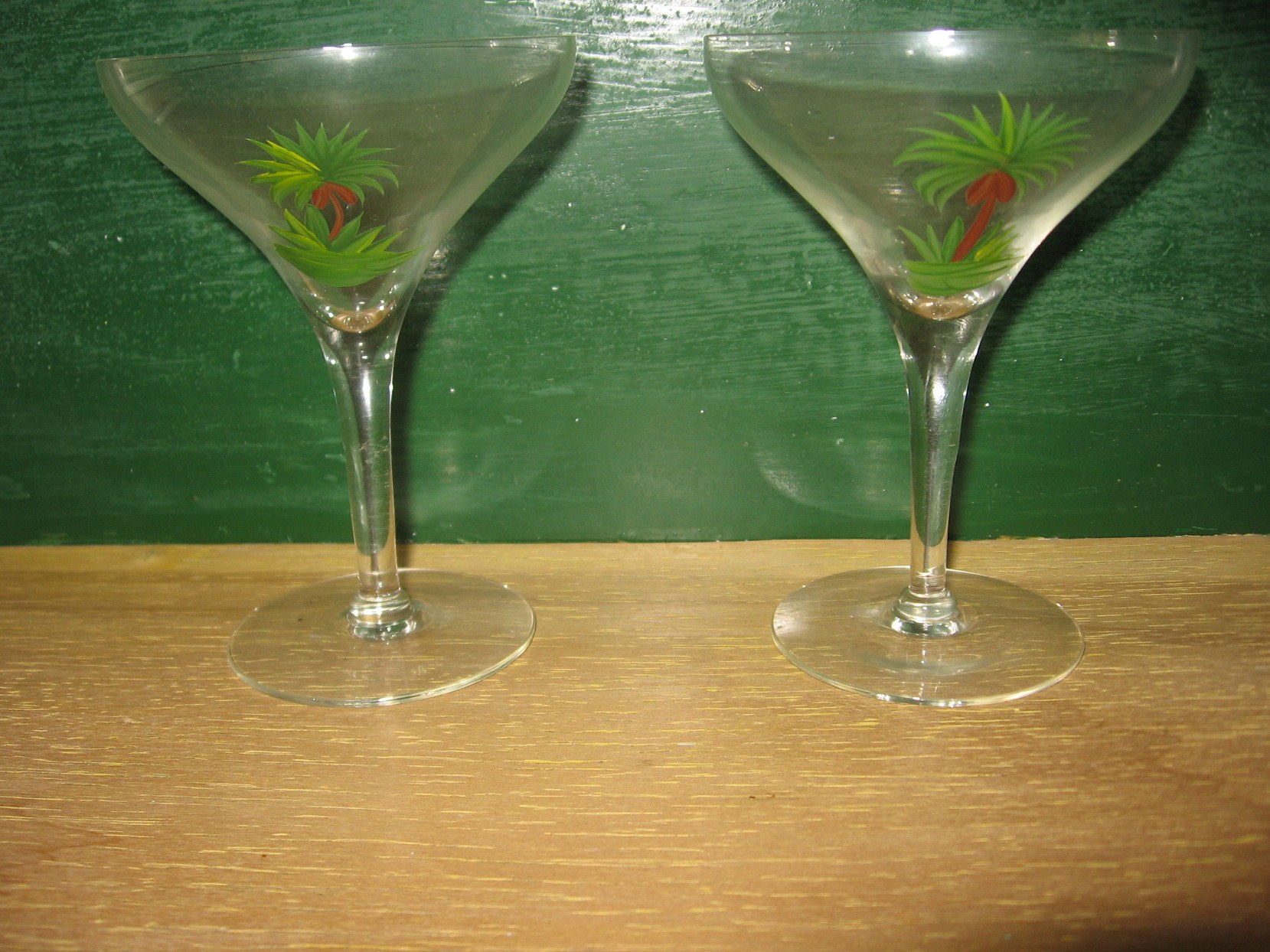
These two champagne cups were wedding gifts Grandma and Grandpa received in 1949. There were probably more pieces to this set, but only these two remain intact, as does the marriage. Don’t these just scream “rumba” and “cha cha cha?” Babaloo anyone? The glass is incredibly thin and fragile, and yet these two pieces traveled from Tampa to Havana to Miami, and like the couple they were intended to toast, remain resilient mementos of a charmed life, full of love, devotion, and bubbly laughter.

As an aside adventure of these glasses, I had read the French claimed the perfect size for a woman’s breast would fit in a champagne glass. Being 12 and incredibly curious, I snuck out one of these cups from the china hutch in the dining room and absconded to the bathroom for the official judging of my own bosom—happily I could claim that my cup runneth over.