Unknown's avatar

About A.M. Herrera

wordster, mother, consort, and a collector of beautiful things

Category 5 Ganesh

I am irresistibly drawn to figures of Ganesh, the many-armed elephant Hindu deity who is venerated by millions as the “Remover of Obstacles” and the “Lord of Beginnings.”

Hurricane Andrew was in a twisted sort of way the Ganesh of Hurricanes—a Category 5 force of nature that swept away the veils that can sometimes confuse us so that we believe we are what we own.

Dad and I had gone to Lollapalooza the day prior to the storm, blissfully unaware of the impending catastrophe. We saw Pearl Jam, Sound Garden, and the headliners were the Red Hot Chili Peppers—one song in particular got stuck in my head—“Give it Away” by the Chili Peppers.

After we emerged from under the mattress we’d dragged into the kitchen at the height of the storm, and the cabinets you had spent the two-hour assault inside of…after I realized we were not going to die, that the world had been remade in shades of broken terracotta tiles, smashed glass, torn vegetation, and blue, blue sky…I walked around the house trying to figure out what I needed to pack up and take with us, and all I could think was:

What I’ve got you’ve got to give it to your mamma, What I’ve got you’ve got to give it to your papa, Give it away give it away give it away now…

I packed up our photo albums, home videos, and some clothes for all of us—everything else stayed behind. My “things” weren’t important for the span of a few days until I returned and began the four month process of rebuilding.

I’d like to say that the life-affirming and liberating feeling stayed with me, but I’d be lying.

Still, last Friday was the 20th anniversary of Hurricane Andrew, and we were once again preparing for a possible strike by soon-to-be-hurricane-but-still-tropical-storm Isaac, and looking at my coterie of Ganeshes, I knew I could “Give it away give it away give it away now” or later if I ever had to.

It’s complicated

ImageI’m not exactly sure the function of this piece – I suspect it is a sort of room divider or jardiniere made out of wood with burled wood finishes in an Art Deco style, probably from the late 30s to early 40s.

How this gorgeous piece got to me is a complicated tale of Dominicans, dictators, and me.

The Reader’s Digest version follows.

The piece originally belonged to the beauty queen mistress of a Dominican dictator (let’s call him RT), who was in power from 1930 until his assassination (allegedly by the CIA ) in 1961 (the year I was born…coincidence?) Being already married and like all good Latin machistas not inclined to divorce, RT did the next best thing by providing financial support and publicly recognizing their out-of-wedlock children – one boy and one girl.

The unofficial household were comfortably and conveniently established in a Miami Beach estate located on Collins Avenue and later sold and torn down to make way for a major resort hotel (the Conover?)

Moving right along, the daughter married Tio Joe circa 1960, and the whatever-it-is passed on to Mother (AKA Belica, Isabel Suarez nee Cremata) – an inveterate keeper of, well, everything. It was in her home, next door to mine, that I fell in love with “it”. Exiled in a storage room adjacent to the carport of Mother’s house, the two tops on either end became water damaged and the veneer warped.  Nonetheless, it was still a score when Mother passed it on to me.

Your father hated it from the beginning. Besotted and bewitched by its beauty and whiff of notoriety, I ignored his threats to throw it out of the moving van or into the backyard lake. Lucky for all of us, he decided to try his hand at restoring it a few years ago, using the greatest of care I might add.

Today, it is a singularly stunning and celebrated piece admired by all who see it…and its piquant provenance ain’t too shabby either!

When Japan was Occupied

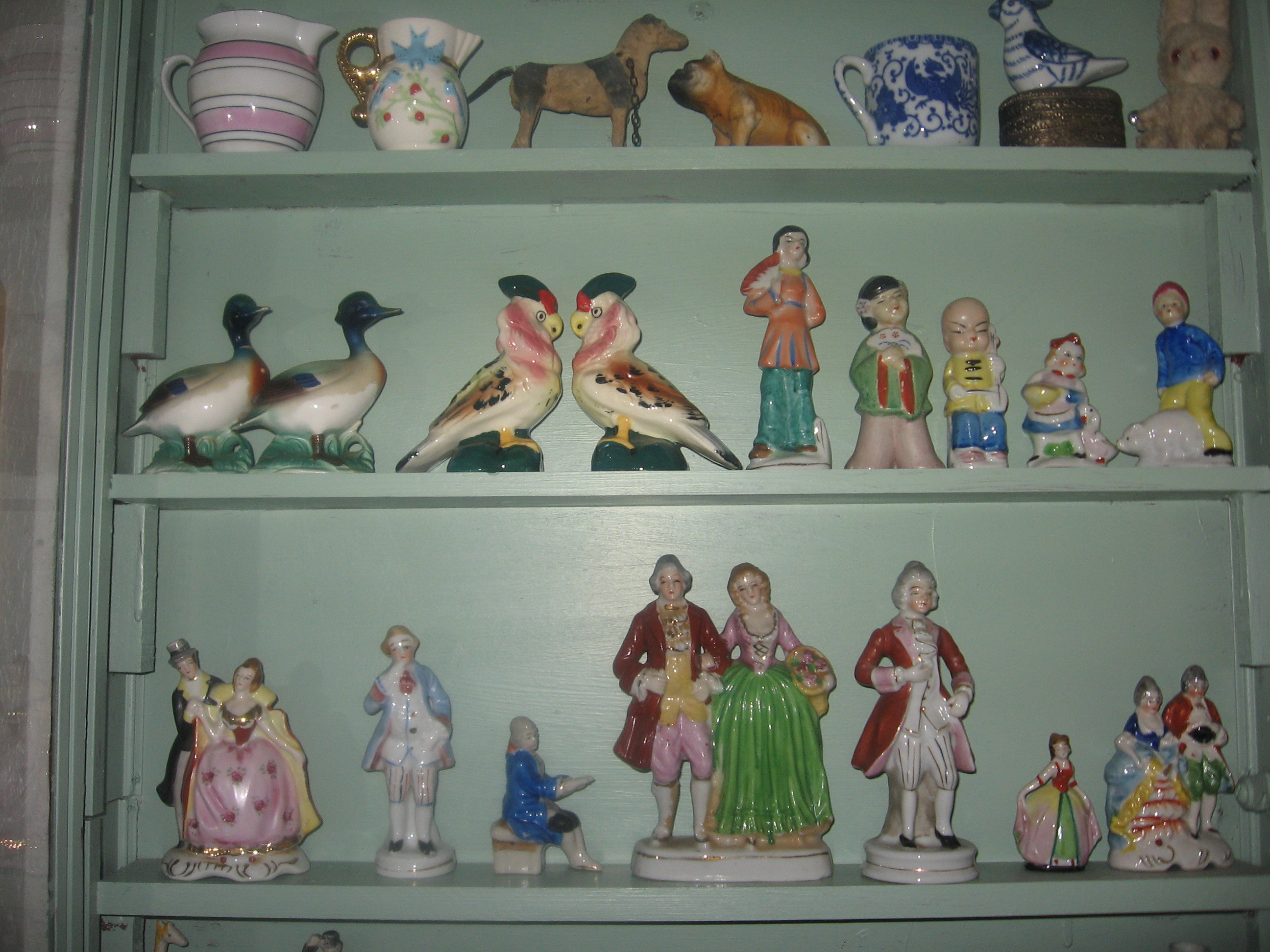
Mother (Belica) had a small ceramic figurine of a gentleman and a lady with “Made in Occupied Japan” stamped on the bottom. This sinister sounding provenance fascinated me, and I always kept track of the figurine’s whereabouts in Mother’s overwhelmingly cluttered home, crammed with objects collected and “rescued” over a lifetime (and according to Mamita “Mucha mierda.”)

After Mother passed away I became the proud owner of this charming pair, and over the years I have collected many pieces bearing the “Occupied Japan” pedigree—paying $2 to $8 or so for each—never more than that. They’re tacky but also quite lovely with a whiff of tragedy in the aftermath of a defeated nation.

“Occupied Japan” figures are a lingering memento to World War II and the period immediately following Japan’s unconditional surrender between August 15 1945 and April 28 1952. Here’s a little background from a website dedicated to the history of “OJ” collectables.

That millions should have paid with their lives in the war against Japan—soldiers in battle, innocent victims of atrocities, and the annihilation of split atoms falling from the sky—only to end up producing cheap souvenirs that would later be collected by people like me.

What’s the value of a ceramic dandy and his gal? Five bucks, ten? But as an artifact that bears the indelible stamp of a holocaust now fading from living memory? Priceless.

Lesson 2: Sometimes the things you own can change the course of your life

When I was 15, I became very upset with Grandma and Grandpa. Don’t ask me why because I don’t remember, but I think it involved grounding me (a rare occurrence in the Rodriguez household–but that’s another story…) In any case, this egregious restriction on my life outraged me so much I decided I would run away from home.

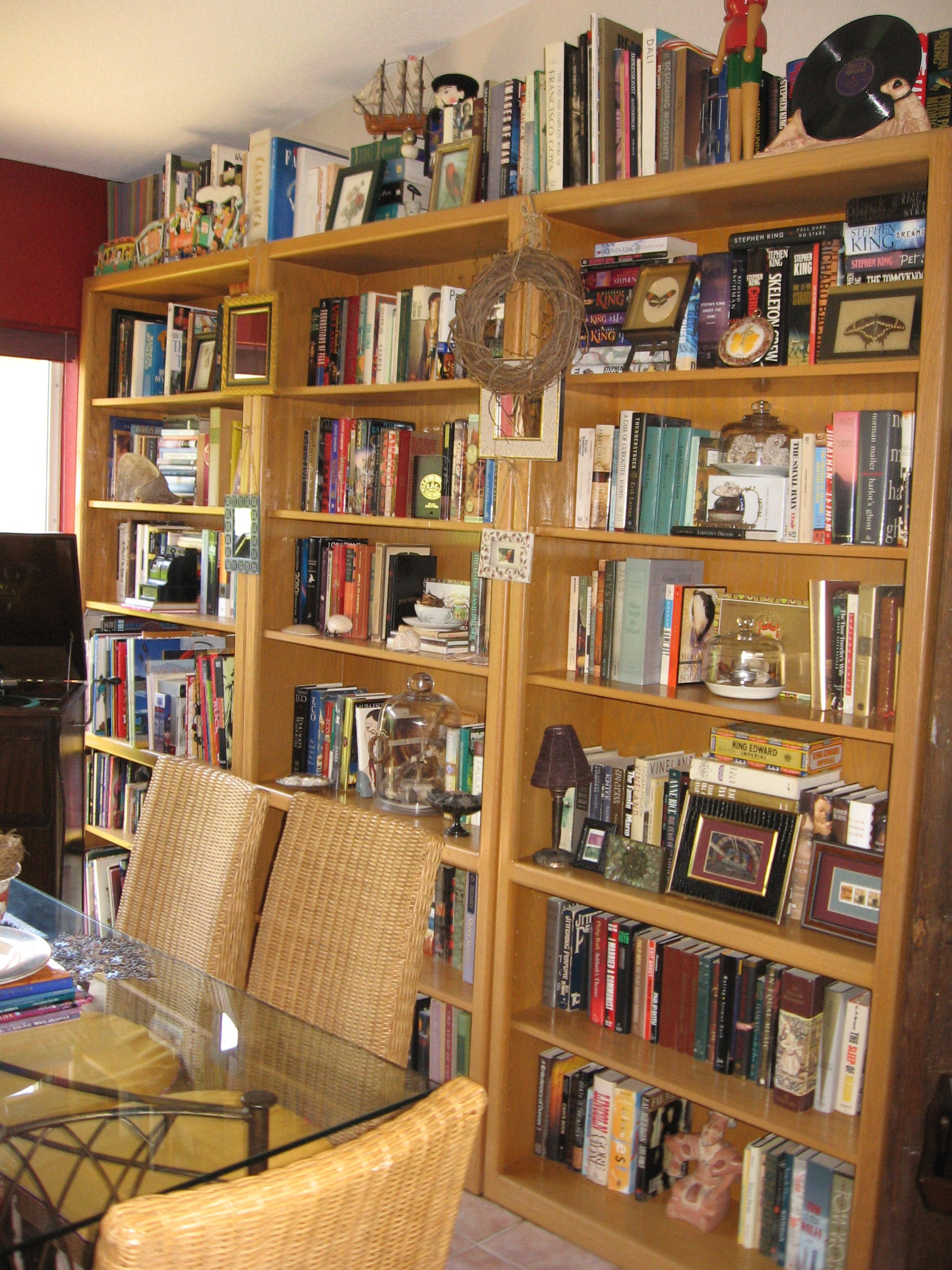
First things first, I started pulling out my clothes from the closet but gave up until I could sneak out several pieces of luggage. Next up, my beloved books. By the time I had piled them all on my bed, I realized I had way too many books to run away from home. I could walk away from my family but never my books. So I put everything back and went on to more pressing issues, like what I would wear to school the next day.

I guess in the long run things turned out for the best, although I still have too many books to run away from home.

I haven’t counted how many books we have, and as you know there are hundreds more scattered all over and hundreds I have purged in the past few years. (I will never need to read Jean Genet again.)

Cheers and Cha Cha Cha

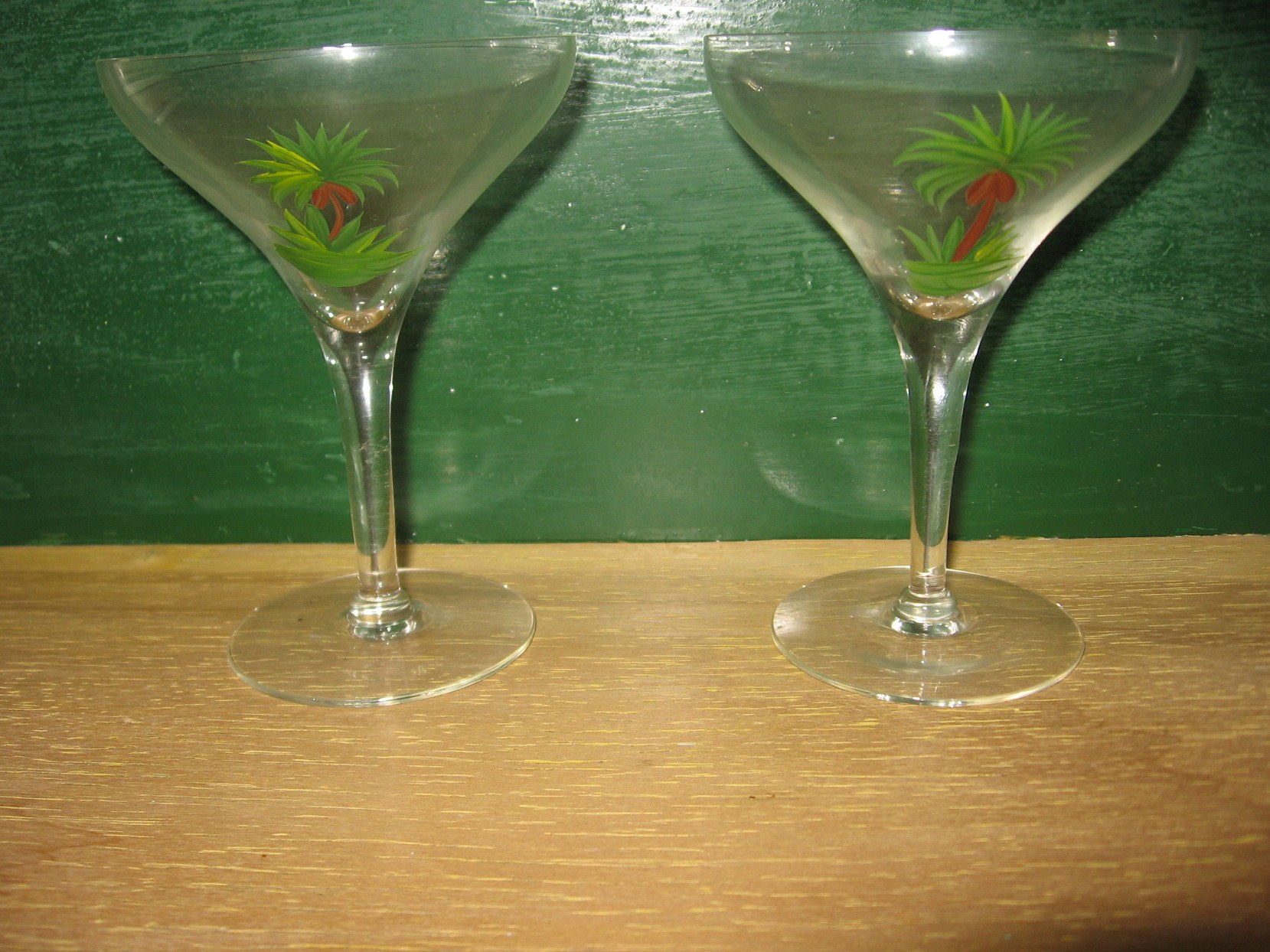
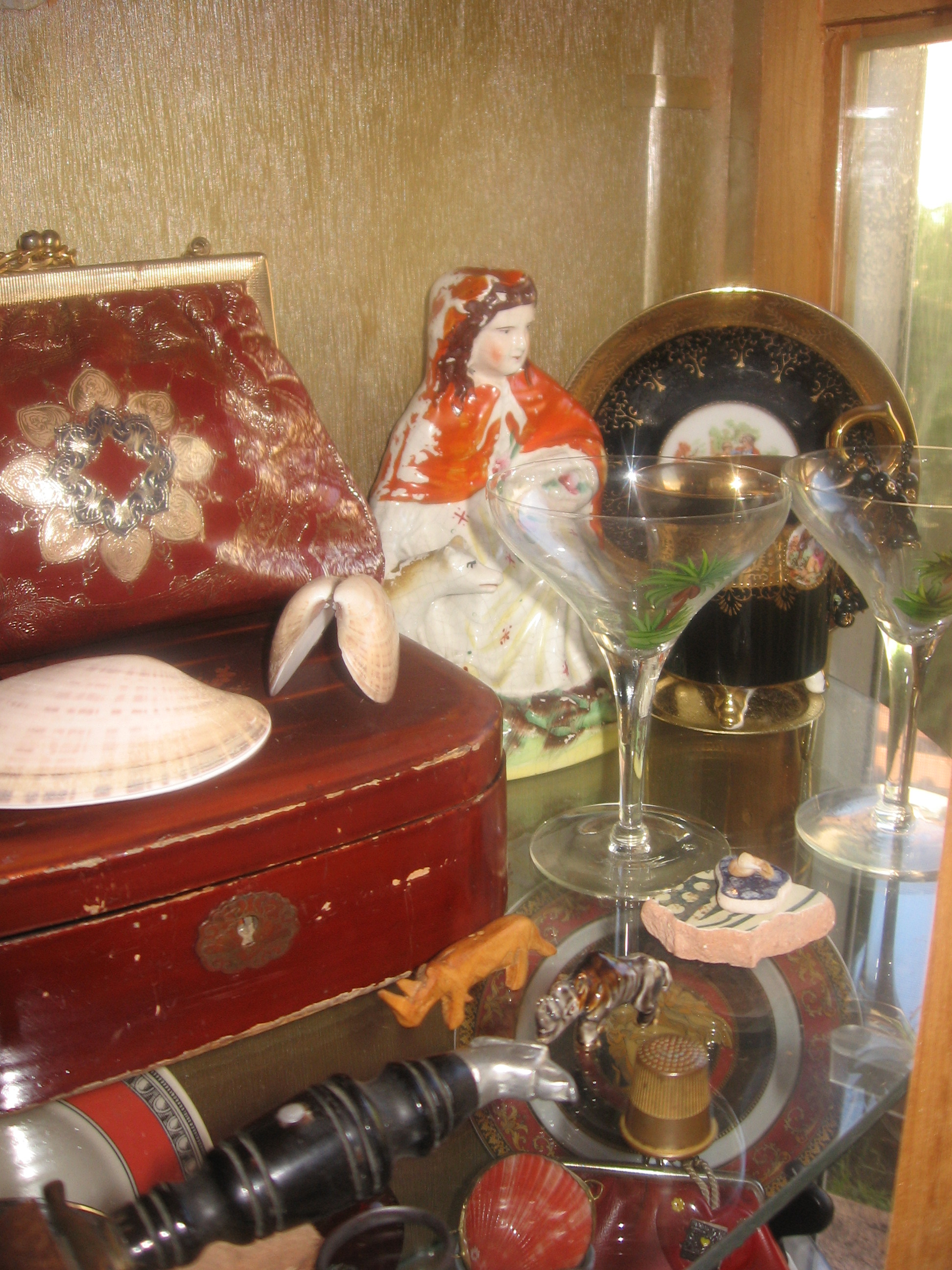
These two champagne cups were wedding gifts Grandma and Grandpa received in 1949. There were probably more pieces to this set, but only these two remain intact, as does the marriage. Don’t these just scream “rumba” and “cha cha cha?” Babaloo anyone? The glass is incredibly thin and fragile, and yet these two pieces traveled from Tampa to Havana to Miami, and like the couple they were intended to toast, remain resilient mementos of a charmed life, full of love, devotion, and bubbly laughter.

As an aside adventure of these glasses, I had read the French claimed the perfect size for a woman’s breast would fit in a champagne glass. Being 12 and incredibly curious, I snuck out one of these cups from the china hutch in the dining room and absconded to the bathroom for the official judging of my own bosom—happily I could claim that my cup runneth over.


The Mamita Trio

I’m not sure anyone can be reduced by the objects they used, but these three unimpressive, dowdy even, treasures are Mamita incarnate. The thimble, ever present as she sewed our clothes. The scissors that she’d carry around in her apron pocket and which snipped away many a “this” and “that.” And the amber bottle with “Elixer Donatal” written in her hand on the fading label. The jewel green liquid medicine had Crème de menthe flavoring and was dispensed frequently by the spoonful for her “nervous stomach.”  Donatal is indeed an elixir. Laced with belladonna and phenobarbital (i.e., a barbiturate), it was just the thing for a homemaker grandmother with a jumpy tummy. It’s also highly “habit-forming.”  Here’s the irony of ironies. Mamita died of stomach cancer at the age of 81. I miss her.

Image

Isabel’s Unrequitted Imperial Vase

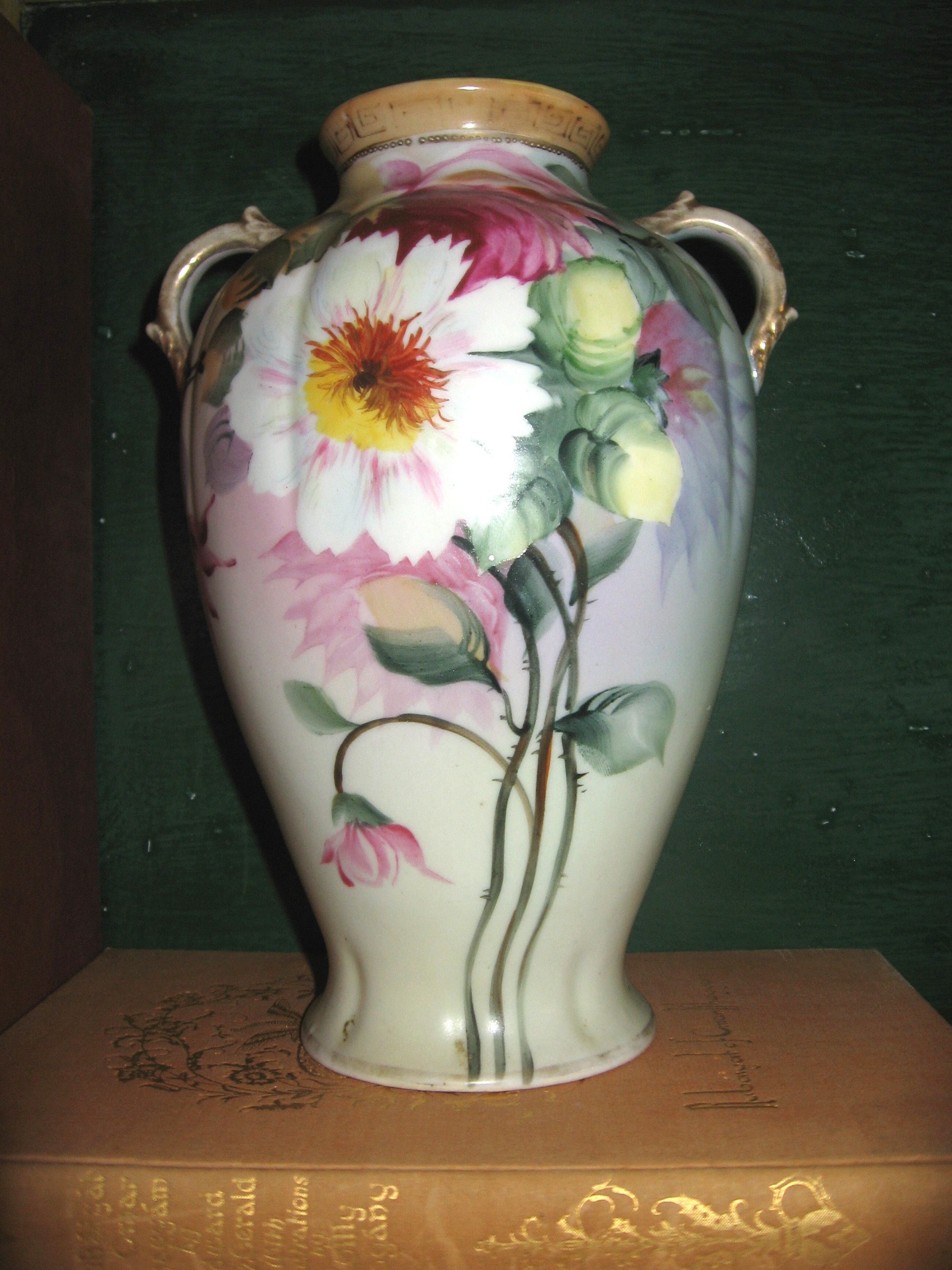
We all called her “Mother” but her given name was Isabel Cremata (also called Belica.) As my great-aunt told it, she was given this lovely Imperial Nippon hand-painted vase circa 1925 by a young physician admirer. “I returned neither his love…nor his vase” she quipped a good 60 years later to me. I always loved its graceful shape and colors, and it was among the treasures I received from that beautiful spirit, who held on so dearly to life well into her 90’s (wearing red lipstick no less).

Angel Maria Serves White Rice

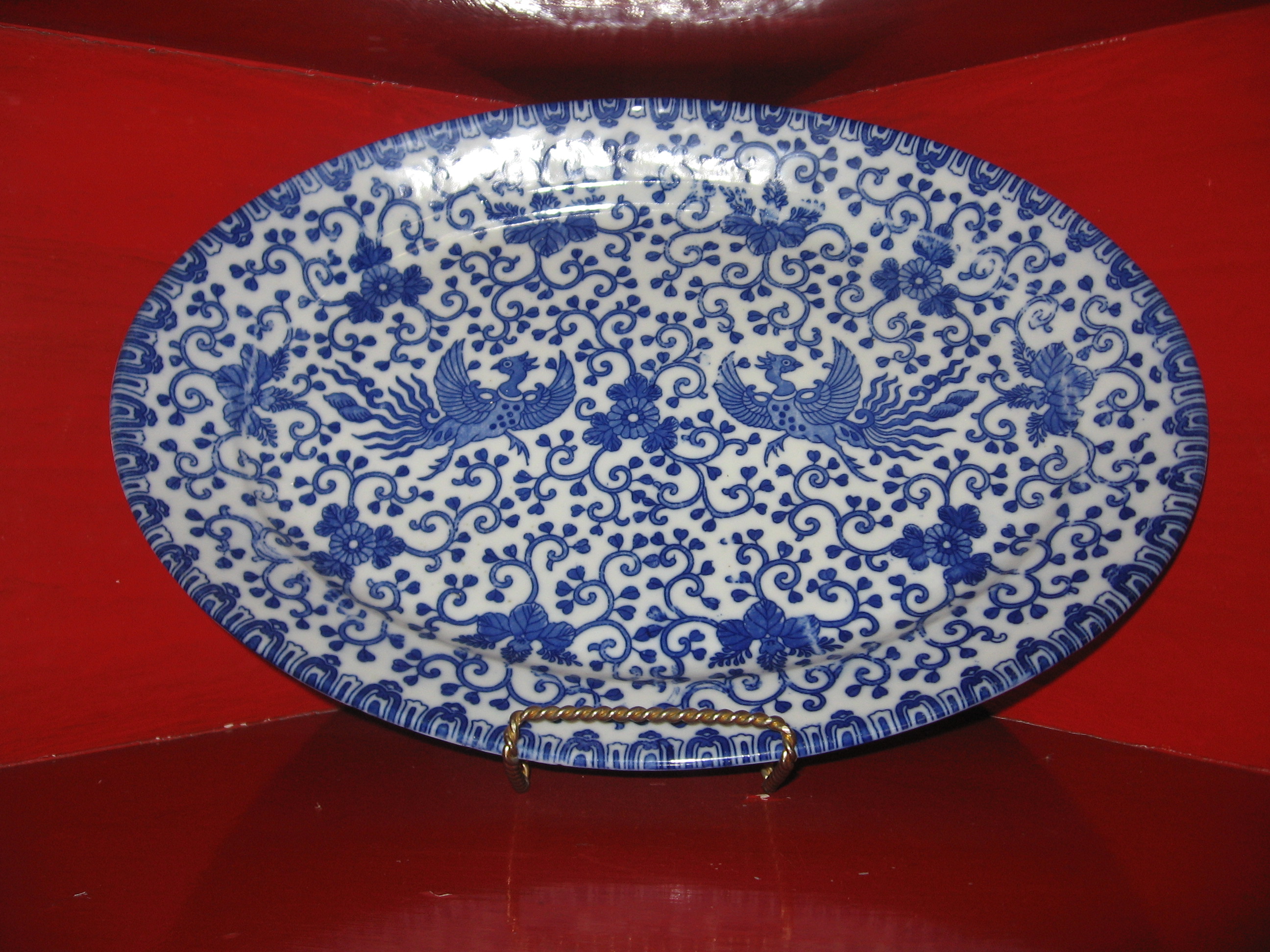
The phoenix blue and white platter (also known as the flying turkey) belonged to your great-great-grandfather, Angel Maria Cremata. He was Mamita’s father and quite a “larger than life” figure: he was a “free thinker,” devout atheist, political party animal, tobacco worker, and one-time anarchist.

“Papa” would serve white rice at family meals on this platter. The marking in the back says “Japan” which means it was produced between 1921 and 1941. He passed away in 1943.

Lesson 1: You are free to get rid of anything and everything…

But only after you have read the descriptions I will include in this virtual catalog for you both. I hope you will feel some connection not only with the objects but with me and your father. And deeper still as many of these pieces previously belonged to your grand-, great-grand and great-great-grandparents, perhaps a part of us will remain present even though we no longer are.

Should you decide your lives have no need of these things, you are free to pass them on to people you know and love, remember you have cousins who share your family heritage. Or armed with the background information I’m providing, you can sell them on e-Bay or on consignment or at a garage sale. And finally, if you don’t want to bother with any of the previously mentioned means of disposal, drop them off at Goodwill or donate to a church bazaar.

You are free to get rid of everything. I would never want to tie you down with the burden of doodads that only have the value you give them. I know you don’t need them to remember me by. But, oh how I hope you treasure one or two pieces and pass on their significance to your children or children’s children.

After I am gone

There will be many objects to sort through. Most useless, all beautiful, to me at least. You grew up surrounded by  these “treasures,” but you may have never really “looked” at them, that is, seen them through my eyes. I hope the little details I will share with you gives you a deeper appreciation for “Mom’s stuff.”