When gaming was unplugged…Or the ageless appeal of Chinese Checkers

You may find this hard to believe, but once upon a time you didn’t need a computer or smart phone to have fun. Humans are social creatures, and we’ve always come up with amusing ways to spend time in one another’s company—and no, this doesn’t include sex. Parlor games like checkers, dominoes, and card playing (except Solitaire for obvious reasons), brings friends and families closer together. There’s nothing to plug in, no bells or whistles to break, and rules are mostly simple and straightforward. Enter the Chinese Checkers Dragon!
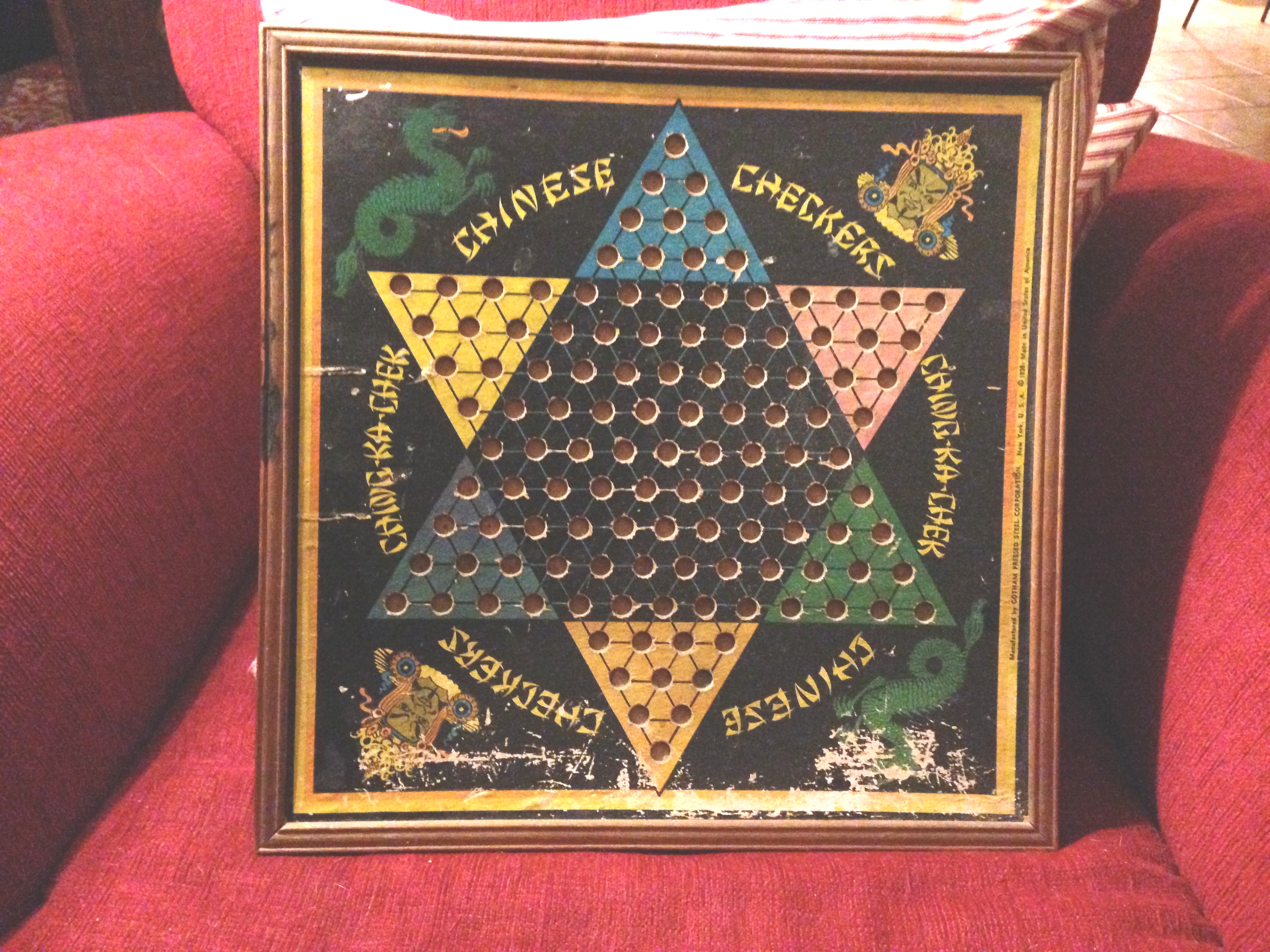
Chinese checkers delight

According to the fine print along one edge, this cutie pie was manufactured by Gotham Pressed Steel Corporation in 1938 and was “Made in the United States of America” (The Bronx to be exact). The other side of the board is for checkers so you can have double the fun. I learned how to play Chinese Checkers on this board, as did Grandma and Tia Adele. Mamita taught me the best way to start the game and how to avoid the pitfalls of leaving your marbles stranded. Two people can have a good time, but the more the merrier. I especially loved when enough of us played that we’d form a tremendous arroz con mango with everyone’s marbles jammed in the middle.

I’ll be honest—every time I’m in a social setting and everyone is looking down and futzing with their smart phones instead engaging one another, I feel sad and more than a little sorry for the future of our species. These digital forms of entertainment lack the personal connection that makes us human. Just remember that when the last Play Station and iPhone lie moldering in some post-apocalyptic junkyard, Chinese Checkers will still rock.
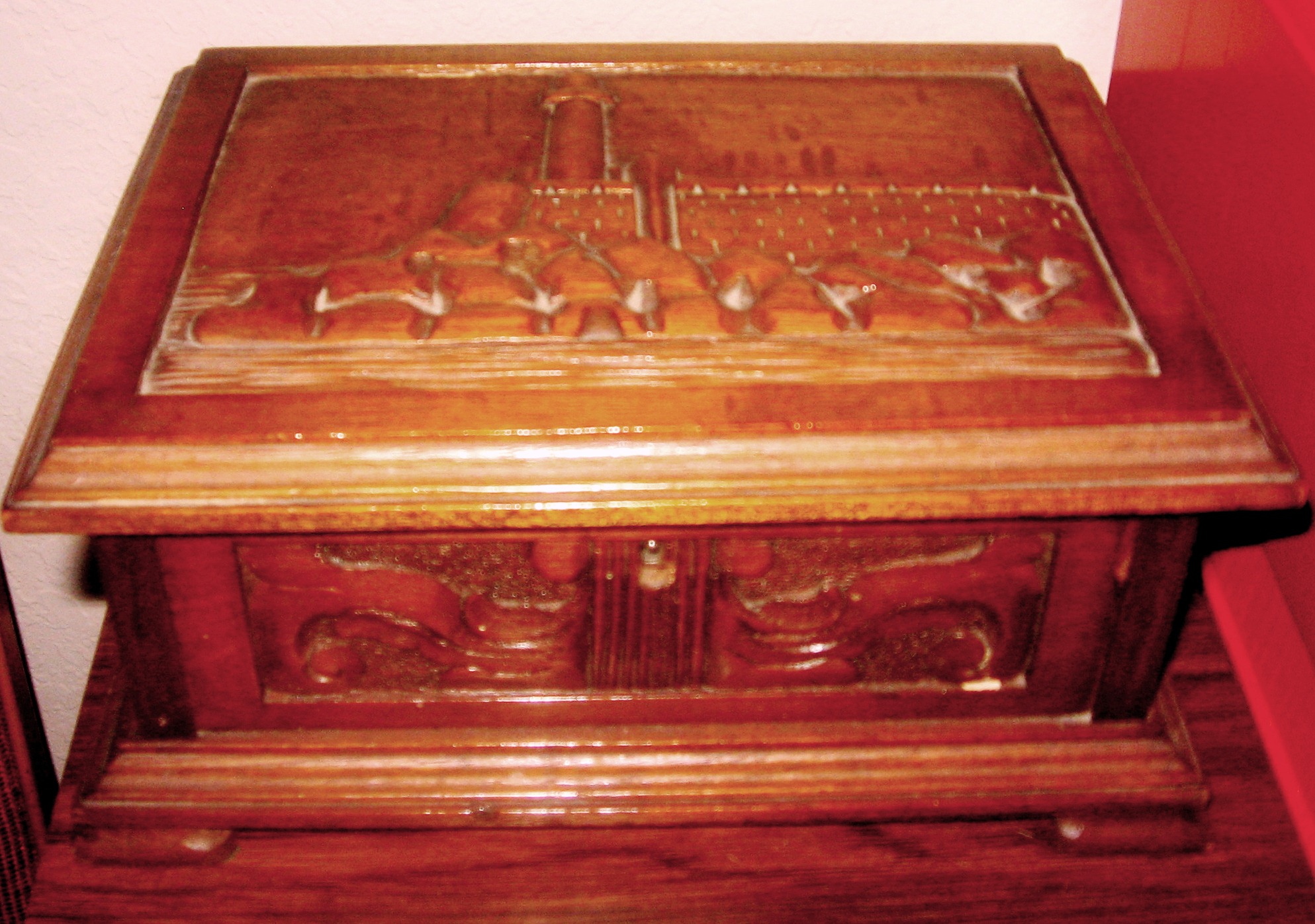
Cuco’s Fine Cigar Box

ImageThis carved wood humidor belonged to Papito (AKA Papo, Cuco, Louis Robaina) and once held finely made Cuban leaf cigars. The carving on the lid is of El Morro Castle, a beloved iconic symbol of Cuba. (Just ask any of your grandparents.) Papito worked in cigar factories in Tampa/Ybor City for a good portion of his life and achieved the distinguished rank of escogedor or color grader. According to Tobacco: Its History, Varieties, Culture, Manufacture and Commercewith an account of its various modes of use, from its first discovery until now (that being 1875 when the book was published): “the general sorting of the tobacco is done by hands of great experience and judgment, who are in the highest consideration in the factories.” Pretty fancy. However this description kind of runs counter to his later reputation for doing “Cuco Robainas,” those blood chilling acts of expedience and innovation by which he sometimes “fixed” things.

You’ve all heard the stories—the clamping of a cigarette-lighter-powered fan onto the dashboard of my Mustang after the air conditioner broke…the staple-gunning of said Mustang’s interior roof lining when it started to sag…the mauve picnic table…the application of cement to a neighbor’s sore tooth…the list goes on and on. There’s no doubt that Papito was a fine craftsman who loved to keep his hands busy, thus the almost complete cementing of Grandma’s and Grandpa’s backyard—believe me when I tell you that this was achieved bit by bit, as if he’d stretched out his ultimate goal so he could enjoy the cement-laden wheelbarrow’s meandering journey across the backyard. That, or he was hoping Grandma wouldn’t notice. He was such a wonderful man and all is forgiven, but not forgotten, now. Thank you, Papito.